Why Your Doors Stick
Doors stick because wood swells and top hinges sag, not because the door is wrong. Here's how to tell which one you have before anyone takes a plane to it.
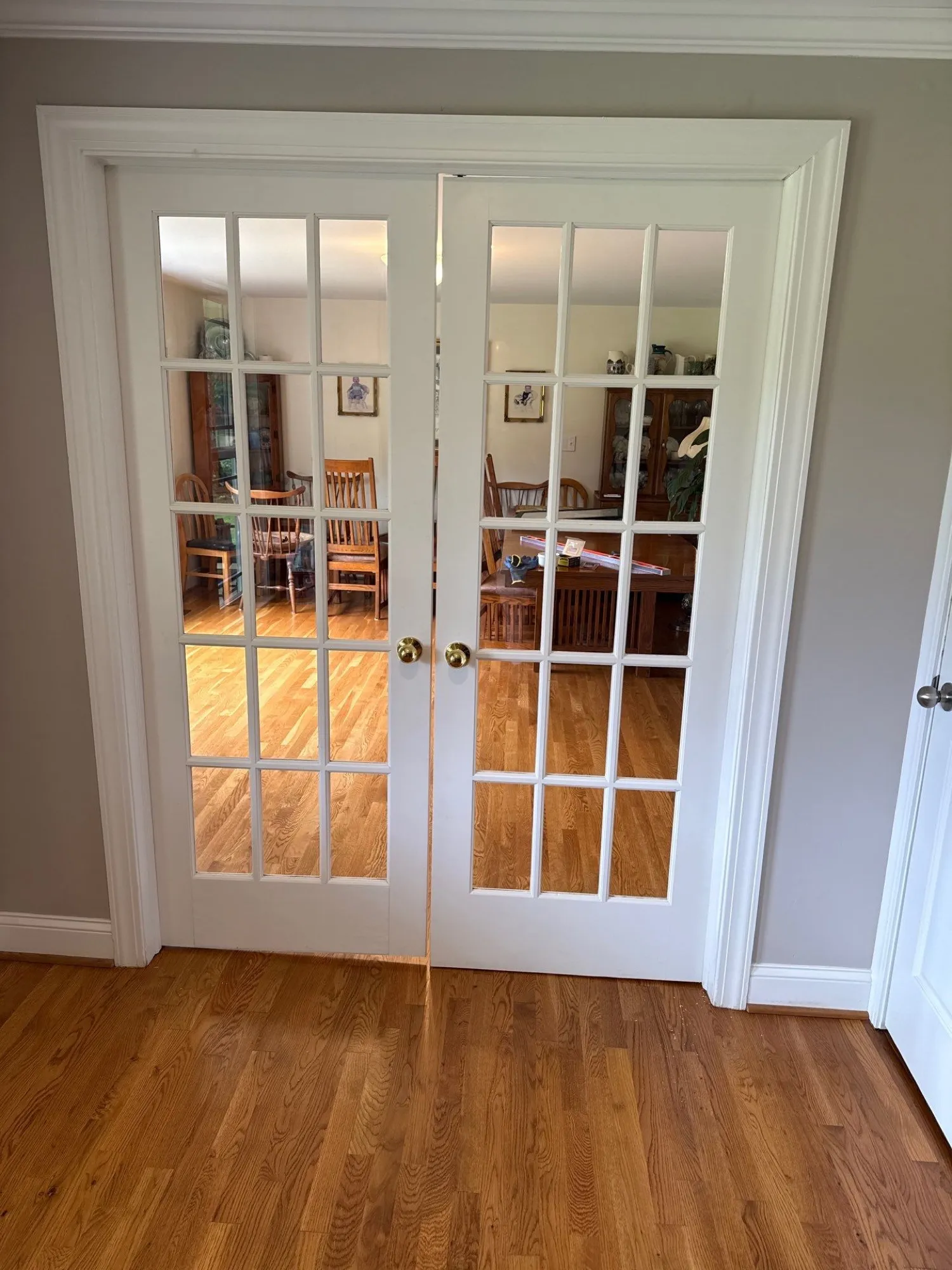
A door you have to shoulder open is a small thing you touch four or five times a day, which is why it wears on you. Most of the time the door itself is fine. The trouble is around it, and once you know what to look at you can tell in about thirty seconds which of the two usual causes you’re dealing with.
Wood moves
That’s most of the answer. Upstate summers run humid and our winters run dry, and a wood door takes on moisture and gives it back with the season. It swells across its width far more than its height, so the first place it binds is the latch edge. A solid door moves more than a hollow-core one. Paint slows the whole thing down, which is why the top and bottom edges matter: on most doors nobody ever sealed them, and bare end grain drinks moisture straight in.
Or the top hinge is sagging
Your door hangs off three screws in the top hinge, and in a lot of houses those screws are three-quarters of an inch long. They bite the jamb and nothing behind it. Give that a few years of pulling and slamming and the top hinge works loose a hair at a time. The door tips toward the latch side and the top corner starts catching.
You can read which one you have from the gaps. Push the door almost shut and look at the line of daylight between the door and the jamb, all the way around. Even top to bottom means the door is still square in its opening and it’s swollen. Tight at the top latch corner and open at the bottom means the hinge is pulling out and the door is hanging crooked.
What to check before anybody cuts anything
Start with the hinge screws. Snug all of them. If one spins and won’t tighten, the hole is stripped, and replacing that single screw with a three-inch one that reaches the framing behind the jamb will often pull the door back square on its own. One screw, and the door hangs right again.
Then look at the strike plate. A door that closes but won’t catch, or one you have to lift by the knob to latch, is usually a strike sitting a sixteenth of an inch off from where the latch now lands. Moving the plate is a better answer than fighting the door.
Planing comes last
Shave a door in August and you own a door with a draft gap in January. When easing a door is the right call, the cut goes only where it’s binding, never the full length of the edge, and that bare wood gets primed or sealed the same day. An unsealed cut is an open straw. Leave it, and the door comes back into the jamb next summer worse than it started.
When it’s worth a call
If the door has quit latching, drags on the floor, or lets weather past the bottom, you’re past what a screwdriver will settle. Our door repair and hanging work starts at the hinges and the jamb, because that’s where the fault usually sits, and the door only gets touched if it has to be. A door should close with one finger and stay that way through both seasons.